

Are You Being Under-Leveled?
The 7-Question Calibration Checklist
for Senior Design Leads
The calibration guide that gives you the clarity you need to figure out if you are truly operating at a higher level beyond Senior Lead, Manager or Designers and your actually operating as a Design Director.

It’s hard to figure out what gets you promoted in Design. That leap from Senior Lead to Design Director can be notoriously difficult to navigate.
As a career coach for design leaders, I encounter Senior-level design leads, managers, and designers operating at the Director level—but without the matching pay, title, and accolades—all the time.
If you suspect you're doing the work of a Director without the corporate recognition, you need to audit your role. Use this quick, 7-question self-assessment to evaluate your true seniority, impact, and leadership scope to see exactly where you calibrate.
The Calibration Checklist
1. Are you guiding multi-functional partners?
The Voice of Design: Operating at a Director level means you are the primary voice for design in the executive room. You aren't just receiving requirements; you are actively defining the vision for the creative solution and bridging the gap between core business needs and design output.
2. Do you have direct reports?
Managing a Creative Team: True leadership means managing beyond your own individual deliverables. A Director has a clear vision and excels at getting others excited to be part of the creation. They give space for others' creativity to shine and remain actively open to new possibilities.
3. What environments have
you worked in?
Cross-Environment Breadth: Have you worked across in-house teams, agencies, or consultancies? Depending on your breadth of experiences, you may be primed for top-tier leadership roles. This context calibrates your understanding of the scope across the design industry, bringing a broad range of knowledge on how to manage work, external vendors, and strategic partners.
4. Are you scoping design initiatives?
Strategic Planning: Leaders don't just execute tasks; they define what tasks need to be executed based on overarching organizational goals. If you are collaborating directly with business leads to map out upcoming design work and explicitly linking design goals with core business metrics, you are operating at a Director level.
5. Are you still designing?
The 50% Hands-On Rule: Spending half your time or less on execution is the primary way to calibrate whether you are transitioning into the Management Lane or operating as a Principal IC. Plain and simple: you can't operate at an executive leadership level if you're spending most of your time executing. If you do, you won't be seen as a leader.
6. What are your direct duties?
Culture & Process: At the Director level, you are directly responsible for the design team's priorities and process—the why and the how. You establish design standards, documentation practices, and frameworks that elevate the entire department's output. Furthermore, you proactively audit the product ecosystem to uncover, pitch, and scope new high-impact initiatives.
7. What is your salary range?
Compensation Alignment: Believe it or not, current and historic salary ranges help calibrate your true marketplace seniority level. Evaluating your relevant design experience alongside your compensation ensures you aren't under-titled—or underpaid—for the real impact you deliver.
Where Did You Calibrate?
Take a look at your answers. Are you sitting comfortably at the Senior Lead tier, or are you actually operating as a Design Director without the title and compensation to match?
If you find yourself calibrating higher, you shouldn't navigate this career leap alone. Let’s talk and get you aligned with the title, pay, and respect you’ve already earned.
Work with me

If you are a senior designer, design lead, or aspiring design manager and you are currently unclear on your next step, this is exactly the kind of work I support designers with.
In a career strategy discovery call, we will:
map your current position in your design career
identify realistic next-step options (IC, manager, or leadership paths)
clarify how to position your experience for your desired direction
outline a practical career strategy for your next stage of growth
If you want to explore this, you can book a career strategy call, complimentary 30-min.

RELATED ARTICLES
Types of
Design Leaders
From hands-on makers to organizational leaders, design roles evolve dramatically after the “Lead” level. But with hybrid expectations on the rise, the lines between craft, people, and strategy are fading. This breakdown helps clarify the roles—and the skills—required to grow your impact.
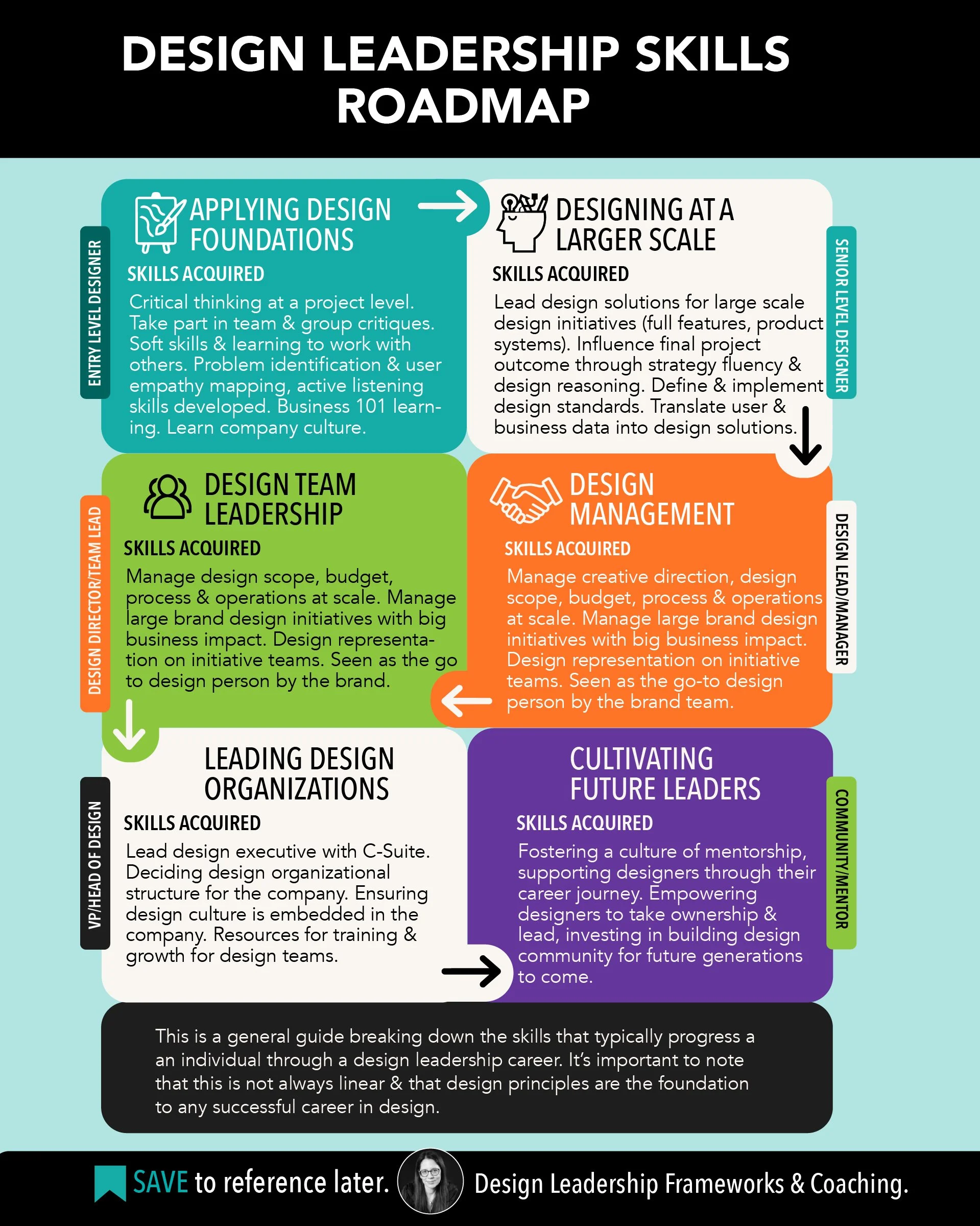
from senior designer to design leader
Many designers believe that "Design Leadership" is simply a natural evolution of being a great individual contributor. We’re led to believe that if we win enough awards, master the latest tools, and maintain a legendary eye for detail, someone will eventually hand us the keys to the studio. That is not the case at all.

FeEling Stuck IN YOUR Design CAREER?
Design Leads get STUCK at level without even realizing it. It starts with a slow increase in responsibility. Because a design lead is talented and reliable, they naturally become the "go-to" for the high-stakes stuff. That’s the mid-career trap. And getting out of it requires a different approach.